We read the ingredient lists, safety data sheets and third-party classifications behind everyday household products — then explain what they actually say.
No verdicts. No scare tactics. No lab coats.
Start Here
Four ways into the same question. Pick the one that matches what you’re trying to find out.
Non-Toxic Product Guides
Category by category — what to look for on the label, which ingredients get flagged by third-party databases, and which products leave them out. Deodorant, cookware, laundry detergent, water filters and more.
Brand Audits
What a named brand actually discloses, and what it keeps proprietary. We report the published standard and the gaps in it — we do not tell you a company is dangerous.
Free From
One chemical at a time. What PFAS, phthalates, parabens and VOCs actually are, where they turn up, what the regulators say, and which product categories avoid them.
Comparisons
Head to head on the things that matter — disclosed ingredients, materials, certifications and price. Brita vs Pur, Caraway vs Our Place, Coway vs Levoit.
How We Work
We read what’s published
Manufacturer ingredient disclosures, safety data sheets and restricted-substance lists — the documents brands put in public and then hope nobody checks.
We cite third parties
EWG hazard ratings, EPA Safer Choice listings, CPSC recall notices and FDA guidance. Every figure links back to whoever produced it, so you can check it yourself.
We don’t run our own tests
No laboratory, no instruments, no claims of hands-on measurement. Our work is reading, cross-referencing and explaining. Full methodology.
Latest Audits
- Caraway vs Our Place: Oven Heat, Warranty and PFAS Proof
 Both sell ceramic pans as made without PFAS. Caraway’s claim passed an NAD review; Our Place’s original pan passed a Consumer Reports test. Warranties differ.
 - HexClad vs Caraway: One PFAS Claim Settled, One UpheldBoth brands sold pans as PFAS-free. HexClad settled a class action over PTFE pans; Caraway’s claim held up at NAD. Coating, care and warranty compared.
- Non-Toxic Air Freshener: What the Label Can’t Tell YouNo rule defines a non-toxic air freshener. Compare disclosure, Safer Choice and EWG Verified, plus plug-in alternatives ranked by what you can verify.
- Non-Toxic Candles: Who Funded the Research on Your WaxNo US rule defines a non-toxic candle. Industry funded the studies; a 2026 study found soy and beeswax emit 12x more ultrafine particles than paraffin.
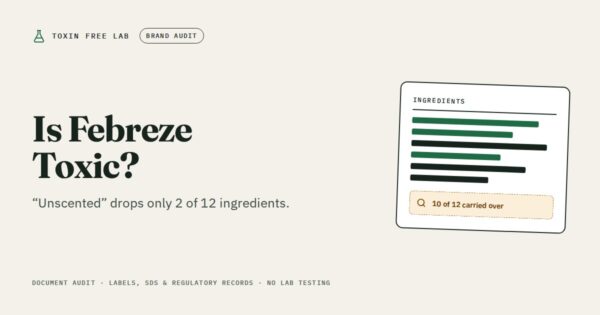
- Is Febreze Toxic? “Unscented” Drops Only 2 of 12 IngredientsNo regulator classifies Febreze as toxic. The label lists all but fragrance, and Unscented keeps the quat and preservative. Full ingredient audit.
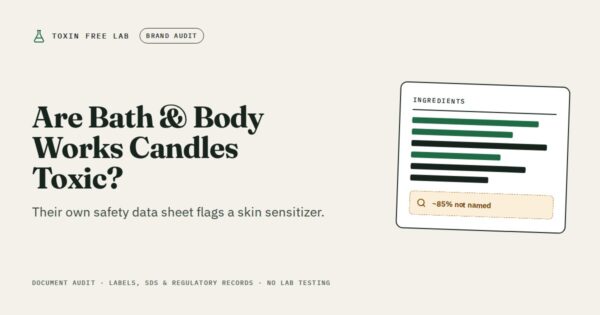
- Are Bath & Body Works Candles Toxic? Their Own SDS Flags a Skin SensitizerBath & Body Works’ candle SDS names 7 hazardous fragrance components and a skin sensitizer code, but not the wax blend. Recalls were fire-related only.
A note on what “non-toxic” means here
“Non-toxic” is not a regulated term. No agency defines it, certifies it or audits its use on a label. So we don’t use it as a verdict — we use it as the question. What we can assess is disclosure: what a brand publishes, what it withholds, and what independent bodies say about the ingredients it names.
Some links on this site are affiliate links, and we may earn a commission if you buy through one. That never changes which products appear or how they’re assessed. Full disclosure.